
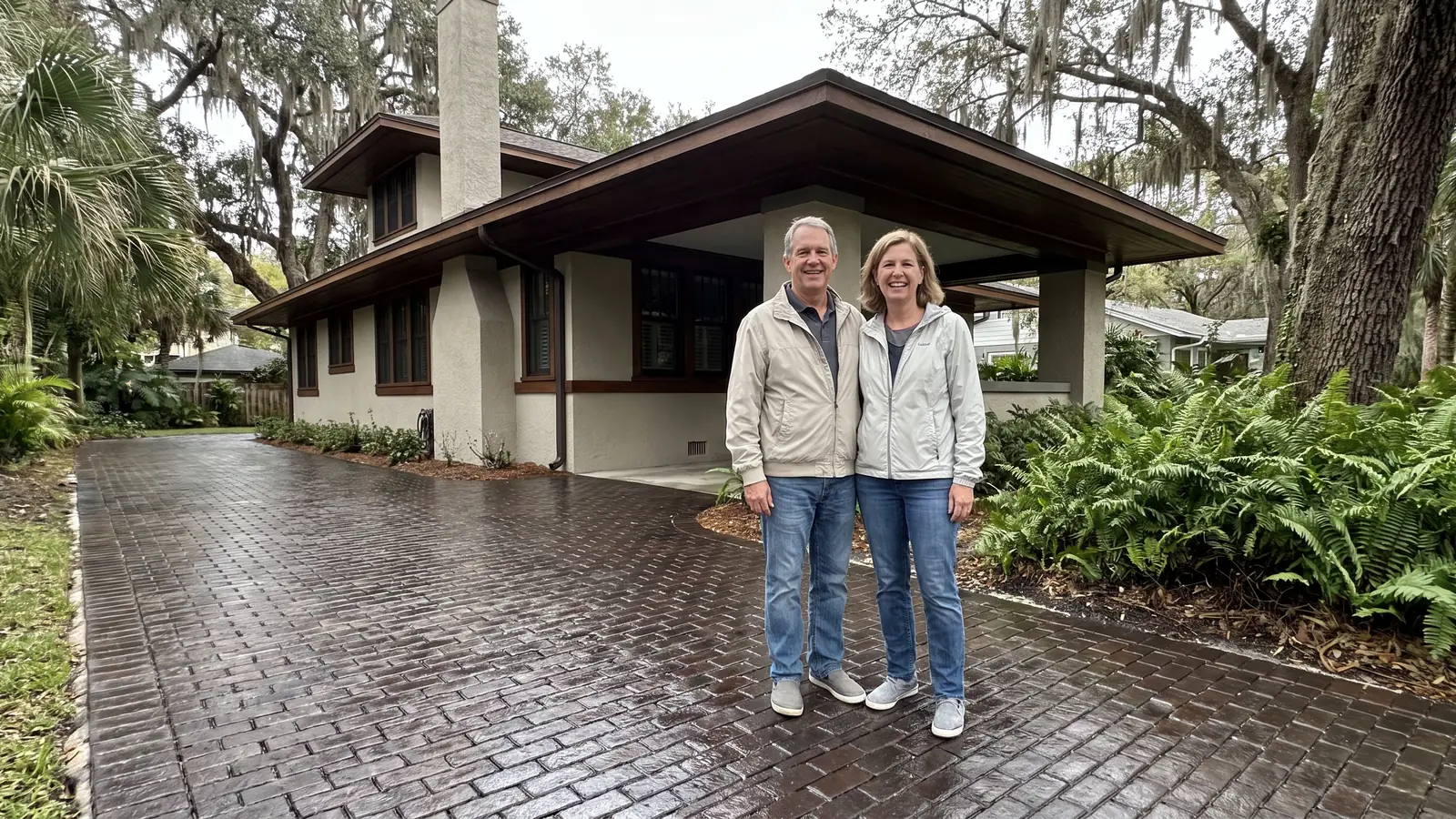
Paver sealing for Atlantic Beach homes
Paver Sealing in Atlantic Beach, FL
Salt, blown sand and old oaks work on Atlantic Beach pavers, so call (904) 569-7795 for a free sealing estimate.
- Brings out deeper paver color
- Fresh joint sand helps lock pavers in place
- Gives weeds less room to grow
- Makes the surface easier to keep clean
- Free estimate, no obligation
Request a Free Estimate
Free, no obligation.
Fast, careful paver sealing in Atlantic Beach
Paver sealing is available across Atlantic Beach, from the beach cottages east of Mayport Road to the ranch homes around Selva Marina. A local contractor can wash, refill the joints and seal a driveway, walkway or pool deck, and the estimate costs nothing. Reach out at (904) 569-7795 and expect an answer within 1 business day, often much sooner than that.
You know the look. A white salt film dulls the color, sand drifts into the joints, and the shady corner under the oak has gone green. Washing, fresh joint sand and a new coat bring that surface back to one steady tone. To describe what you see, ask for a free estimate.
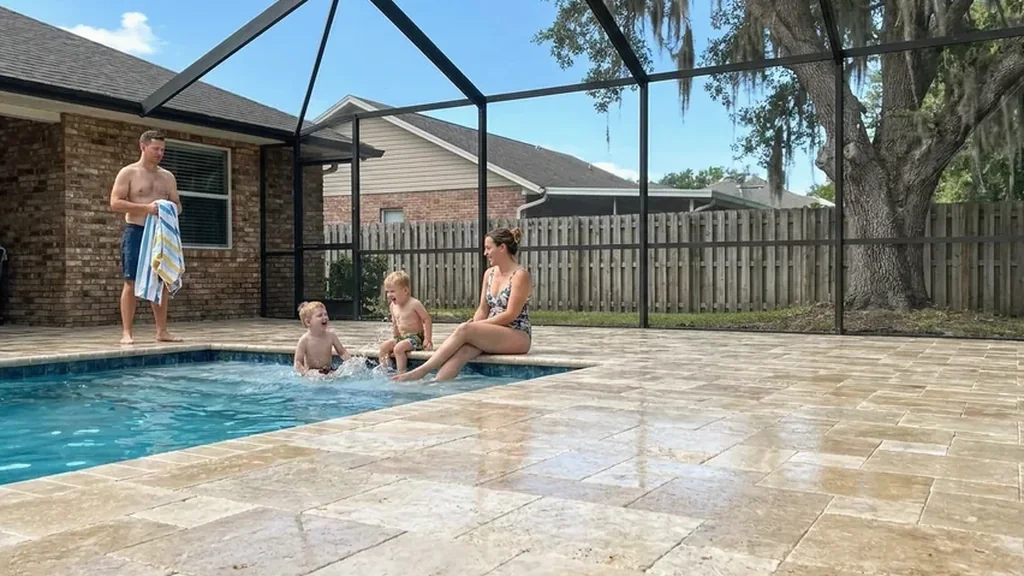
Why hire a local paver sealing contractor in Atlantic Beach?
Atlantic Beach sits on a barrier island where salt and sand reach every driveway, so a contractor who works the Beaches already knows what that does to a coat. To ask how it applies to your street, ask for a free estimate.
Free look, free price
The contractor visits your Atlantic Beach pavers and quotes a price at no charge. You decide afterward, with no pressure.
A range worth knowing
Think of $1.75 to $3.25 per square foot as the published band for a wash, new sand and sealer around Northeast Florida. Hold any Atlantic Beach bid up against that range.
A look that fits a beach home
Matte is popular locally and hides scuffs. A wet look deepens color but shows wear sooner. You pick the sheen, and you can ask to see samples first.
Salt and sand are expected
A contractor on the Beaches plans for the white film and blown sand, not just for the dirt you can see.
Get Your Free Estimate in Atlantic Beach
Tell us about your pavers in Atlantic Beach.
Free, no obligation
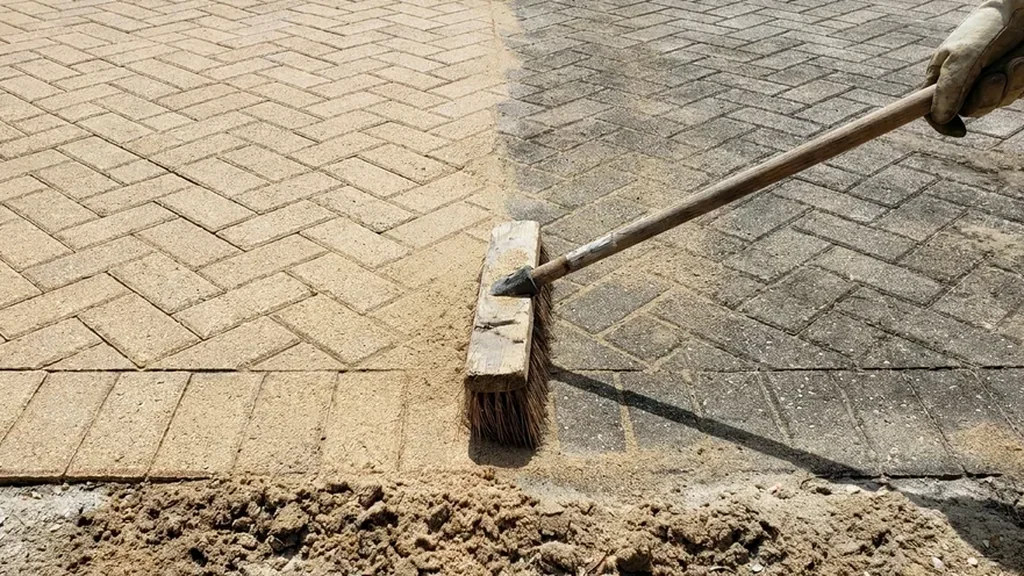
What paver problems show up most in Atlantic Beach?
White film from salt spray
A Jacksonville paver company says salt spray leaves a white film on unsealed pavers and speeds fading. University of Florida says people within a couple of miles of salt water have likely seen spray damage on plants. A paver maker adds that salt crystallizes as moisture dries and that pale pavers show it first. The film has to be washed off before any sealer goes on, because a coat laid over it would only seal the haze in. After the wash the color usually looks deeper right away. About 73 percent of the city's 13.0 square miles is water, so humid, salty air is never far from any driveway.
Beach sand in, joint sand out
The same company says fine beach sand blows in while the original joint sand washes out. That leaves loose joints and pavers that rock underfoot, and a rocking paver is a trip hazard on a walkway. Mayport, on the same island, gets about 48.5 inches of rain a year, with the heaviest months in June and September. Washed-out joints let weeds and ants in, so fresh sand goes in before sealing. That small step is what keeps the pavers from rocking a year later. One company says sealing keeps joint sand from blowing and washing out, which helps with both problems at once.
Soft, shifting ground under the base
Loose sandy soil under Atlantic Beach shifts when water runs beneath pavers, according to a beaches paver company. Low spots form near downspouts, A/C pads and the street apron. It also says salt does not harm the pavers themselves, since the base and joints are what fail. Sunken spots are reset first, because sealer keeps whatever is under it. Ask the contractor to show you each low spot they plan to fix, so nothing is a surprise on the quote. The same company points to pavers 15 to 20 years old off Plaza, Ocean Boulevard and Seminole Road, where bases have had a long time to shift.
Oak shade and acorn stains
UF/IFAS says live oaks grow 60 to 80 feet tall with a 60 to 120 foot spread, and that water oak acorns stain concrete where they fall. Johansen Park, on Seminole Road, is known for its tree canopy. Under that kind of cover, pavers stay damp and turn green, and the stained patches follow the shape of the branches overhead. Stains and algae are washed off before the coat. Laurel oak leaves typically hold on until early spring, so the mess arrives late in the season and lingers on the surface.
Faded color on older pavers
A paver company says many homes off Plaza, Ocean Boulevard and Seminole Road have pavers 15 to 20 years old. Sun and salt chalk unsealed color over that long, and the surface can feel rough to the hand. PaverGuard says driveways near salt air need resealing closer to every 18 to 24 months. A new coat brings color back, and a color-enhancing sealer deepens it. If your pavers are that age, expect the contractor to look hard at the joints and the base as well as the surface. A paver maker writes that pale pavers show salt residue and sand sooner, so lighter colors need a wash and a coat more often.
Does sealing differ for beach cottages, Selva Marina ranches and Royal Palms homes?
A little, yes, because each area has its own pavers and its own salt exposure, and the contractor should ask about both. A paver company describes older beach cottages east of Mayport Road, where lots are small and access is tight. Small jobs can cost more per square foot, and gates and stairs add prep time, which is worth asking about up front. Tell the contractor how close you are to the ocean when you ask for a free estimate.
Selva Marina Country Club dates to 1958, and the first Greater Jacksonville Open was played there in 1965. A paver company lists ranch homes there, with later infill near the country club and Johansen Park. Royal Palms homes were mostly built after 1960, with a median build year of 1971. Tell the contractor which area is yours when you call (904) 569-7795.
If your street has no HOA, the choice of finish is yours. Where an HOA does exist, its own written guidelines are the place to look. A natural-look matte coat is the likelier fit for any beach neighborhood with rules, since it reads as upkeep and not as a change. Read your own rules before you pick a sheen, and then ask for a free estimate.
What does paver sealing cost in Atlantic Beach?
Think of the published range as a starting line. Northeast Florida companies commonly quote $1.75 to $3.25 per square foot to clean, sand and seal. A small cottage walkway can run higher per foot than a wide drive, because prep does not shrink with the area. Get a number for your own pavers when you ask for a free estimate.
Salt and sand add their own line items. A white film or a salt-water pool deck needs a longer wash, and a non-slip matte sealer around the pool. Failed old sealer is stripped first, which costs more. Call (904) 569-7795 to hear how the contractor would price your mix of surfaces.
| Paved area | Typical example | Clean, sand and seal |
|---|---|---|
| 300 sq ft | Small patio or walkway | $525 to $975 |
| 600 sq ft | Two car driveway | $1,050 to $1,950 |
| 1,000 sq ft | Large driveway or pool deck | $1,750 to $3,250 |
| 1,500 sq ft | Driveway plus pool deck | $2,625 to $4,875 |
Math based on the $1.75 to $3.25 per square foot that Northeast Florida paver companies publish. Your contractor sets the actual price after seeing the surface. Repairs, leveling and stripping failed sealer are usually extra.
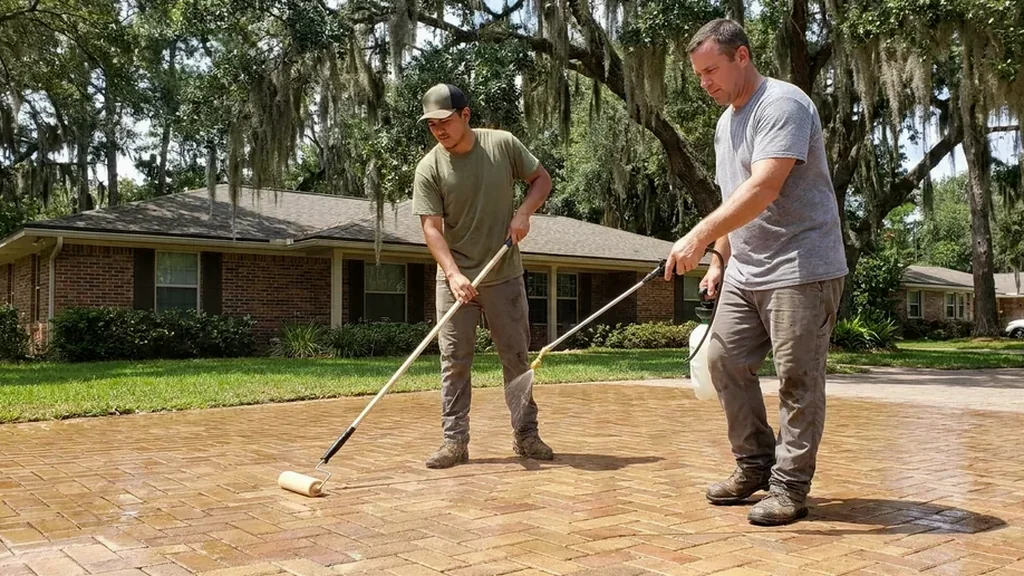
How does a paver sealing job work in Atlantic Beach?
Walk the property and read the ground
The contractor checks where water runs, since low spots show up near downspouts, A/C pads and the street apron. Hand-laid cottage walks and tight side yards get a closer look, because access there is limited. Sunken or lifted areas get reset first. The contractor also asks about any past sealer, because water-based cannot go over solvent-based. Mention how close the ocean is, since that changes how often a recoat makes sense. Pavers 15 to 20 years old, common off Plaza and Seminole Road, often need the base checked before anything else.
Wash off salt film and oak stains
Washing takes off the white salt film, green growth and acorn stains from under the oaks. Oil and rust spots are pre-treated first. Pressure stays moderate, since above 3,000 PSI can strip a standard concrete paver. Some stains may not fully lift, and the contractor tells you which. Rinse water is kept off wood trim and garden beds where it can. Salt-water pools plus ocean air are hard on paver decks, so pool areas get an extra rinse.
Refill the joints with fresh sand
Washing pulls out joint sand, and beach winds and heavy rain keep moving it around. Fresh sand goes in and is packed down. Closed joints give weeds and ants nowhere to start, and they keep blown beach sand from settling in the gaps. Ask for a sand color that matches the pavers, since a close match makes the joints look tidy. The surface is swept clean before the dry wait begins. Some companies offer six sand colors, so a close match to your pavers is usually possible.
Pick a dry day
Sealer needs a dry surface, and PaverGuard says never to seal over a damp surface or right before a forecast downpour. Humid air near the water can slow drying. The same company says spring and fall often offer the most stable weather for the job. If a shower arrives mid-week, the date moves, and that is a good sign, not a delay. Nearly every call about sealer turning white traces to sealing damp pavers or laying it on too thick, one company says, so nobody rushes this step.
Spray, roll and keep off
The contractor sprays the sealer and back-rolls it into the joints so the coat is even from edge to edge. A pool deck gets a non-slip, matte finish. One local company says walking is fine after a few hours and driving can wait about a day, while another asks for 2 to 4 hours before feet. Ask for the product name for your records, so the next coat matches the first. Thin coats beat thick ones, because sealer laid on too thick can turn white.
Complete paver services in Atlantic Beach
An Atlantic Beach job runs wash, sand, dry, seal. The wash lifts salt film, algae and acorn stains, and new sand goes into the joints before the sealer goes on last, over a dry surface. On shaded lots the dry wait runs longer than on open ones. For a sense of timing on your street, call (904) 569-7795.
Driveways and front walks take the most traffic, while back patios and pool decks take splash, and shaded courts under the oaks stay damp. Salt-water pools plus ocean air are hard on paver decks, one local company says, so it uses a non-slip matte sealer there. Garage aprons and walks at the front door wear first. Tell the contractor about each surface when you ask for a free estimate.
Sealer is water-based or solvent-based, and an old coat decides which one can go on. Then comes the look, and one local company says natural matte is the popular choice here, with wet look offered for driveways. Matte hides scuffs, while a wet look deepens color and shows wear sooner. Call (904) 569-7795 to talk through the finish for your home.
Timing follows the sea breeze and the storms it feeds. Northeast Florida's wet season runs June through September, and spring and fall often give steadier weather for sealing. Near the water, companies suggest coats closer to every 18 to 24 months. To plan a date, ask for a free estimate.
Questions to ask before you hire
- Will the joints get topped up with sand before the sealer is applied?
- Which sheen will my pavers end up with, and is that something I pick?
- How many hours until bare feet and paws are safe on the finished surface?
- What keeps the mulch, ferns and potted palms at the edges from getting splashed?
- Who handles low spots where the pavers have settled?
- Can you put a small sample patch down before the whole driveway gets sealed?
- Will my red and tan pavers keep their natural tone after sealing?
What do sealed pavers look like around Atlantic Beach?
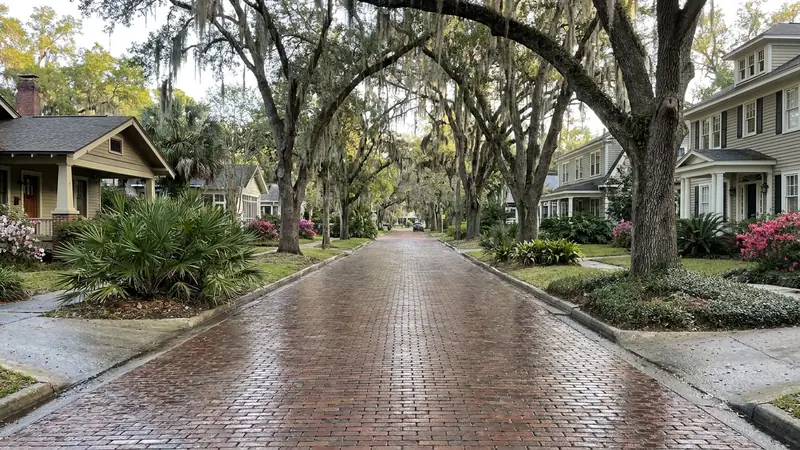
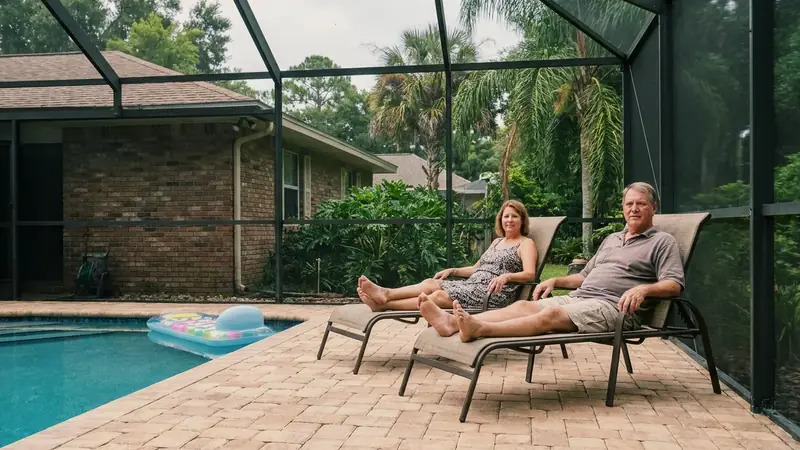
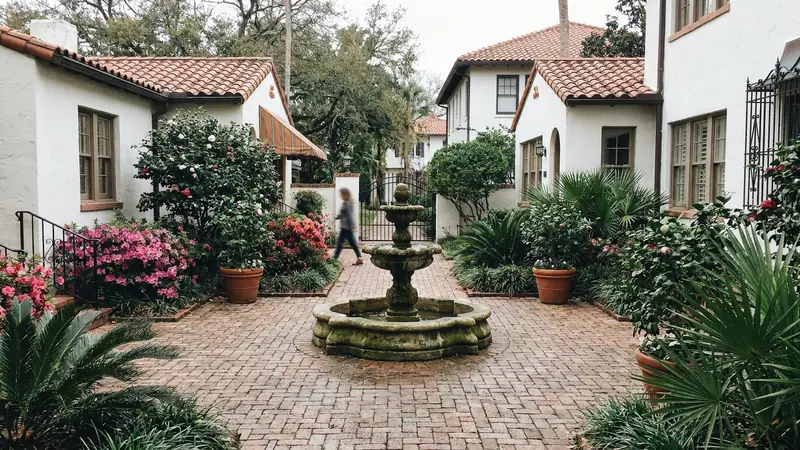
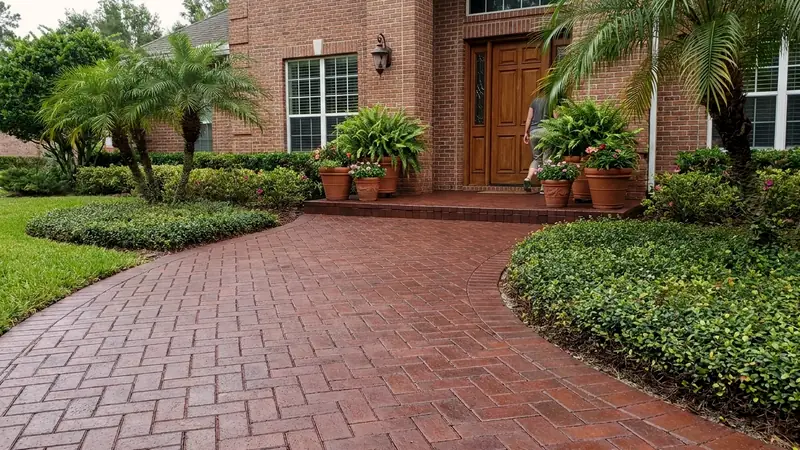
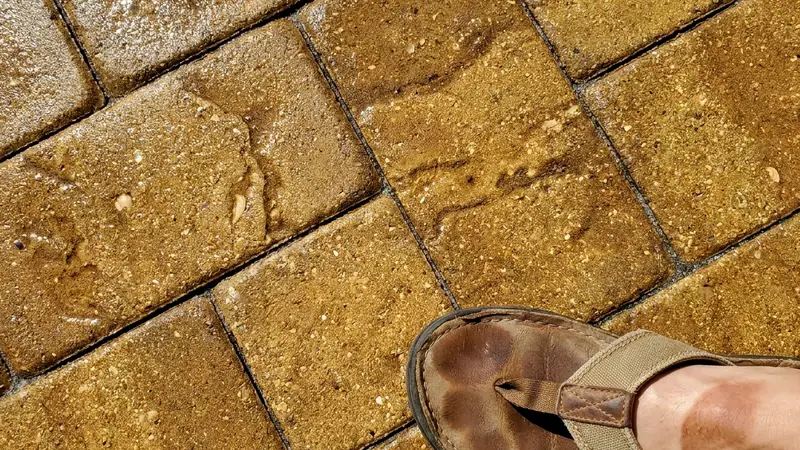
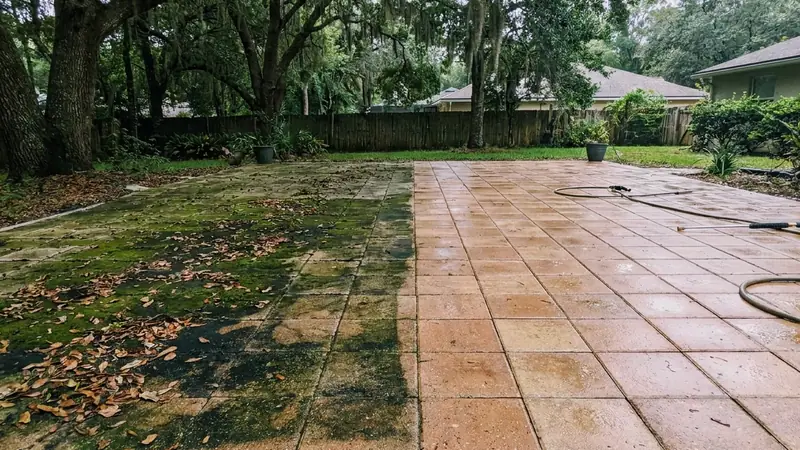
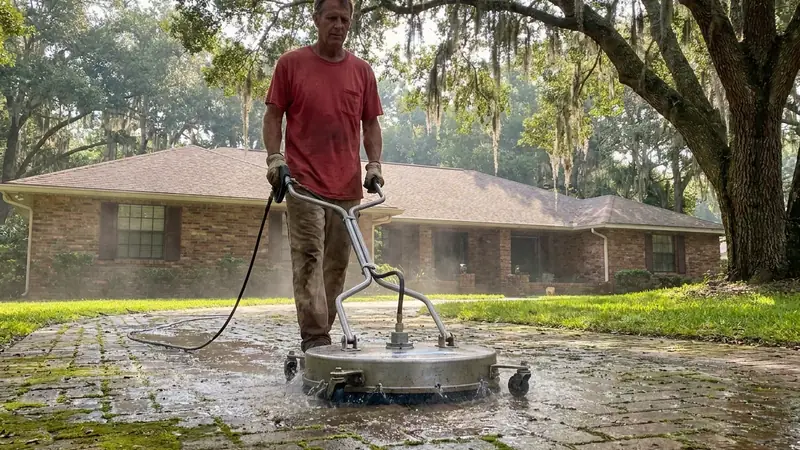
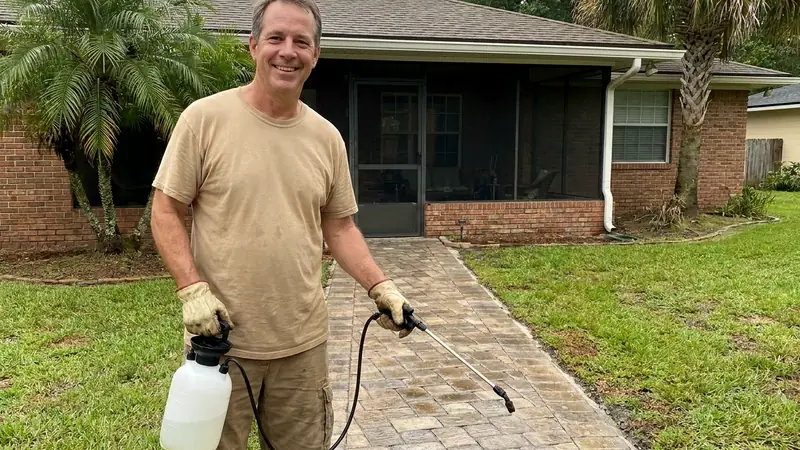
Why local matters in Atlantic Beach
A contractor on this stretch of coast knows the white film on a driveway is salt, not just dirt, and plans the wash around it. They also know loose sand can shift under a paver, so the base gets a look before any sealer. Someone from inland may not think to check, and a quick look at the base can save a redo. For a contractor used to island work, call (904) 569-7795.
Timing is the other half of local work. Northeast Florida has a nearly daily summer sea breeze that builds showers, and humid air near the water can hold moisture on a surface. A local contractor keeps an eye on that and will move your day instead of sealing over damp pavers. You can ask for a free estimate and ask how the schedule handles a wet week.
Local work also means knowing the housing mix, from older cottages east of Mayport Road to ranch homes in Selva Marina. Tight cottage lots call for hand work, and open ranch drives take more sun. If you are not sure what applies to your lot, ask for a free estimate and describe the house, with no obligation to hire anyone.
Where did Atlantic Beach's streets and parks come from?
Mostly from the railroad. Henry Flagler built the Mayport branch in 1900, and the Continental Hotel followed with 250 guest rooms, a dance pavilion and a fishing pier. Atlantic Boulevard was completed in 1910 as a link to Jacksonville, and after 1913 the Atlantic Beach Corporation paved streets and ran the first light, water and sewer lines. If you live near that old boulevard and want an estimate, ask for a free estimate.
The town was incorporated in 1926 and became a city in 1957. Its parks include Donner Park on George Street, the 12-acre Johansen Park on Seminole Road and Dutton Island Preserve, where gopher tortoises live in the dunes. Kathryn Abbey Hanna Park, 447 acres of coastal hammock at Mayport, is next door, and Naval Station Mayport, commissioned in December 1942, sits on the same island. If you live near one of these parks, call (904) 569-7795 and name your street.
Frequently Asked Questions
Is it good to seal pavers in Atlantic Beach?
In most cases, yes. A beaches paver company says sealing slows weeds and ants, keeps joint sand from blowing and washing out, and adds a layer against salt and sun. Sealed pavers also rinse clean more easily. In Atlantic Beach, where salt spray leaves a white film, that protection counts. Keep in mind that a wet look shows scuffs sooner than matte.
How much is paver sealing per square foot in Atlantic Beach?
Think of $1.75 to $3.25 per square foot as the published band for a wash, new sand and sealer around Northeast Florida. Small cottage lots, tight access and failed old sealer push the price up. A written total area in the quote lets you test it against that band.
Can a contractor clean, sand and seal my Atlantic Beach pavers in one job?
Yes, most companies do all three as one job. The stages go in order: wash, new joint sand, dry time, then sealer. The surface has to be dry before sealing, so a humid week near the water can stretch the schedule.
How long do paver sealers last in Atlantic Beach?
Two to five years is the common quote, though a salt breeze can shorten it. Near salt air, PaverGuard says driveways need resealing closer to every 18 to 24 months. Faded color and a rough, chalky feel are other signs a coat has run its course.
Does salt air ruin pavers in Atlantic Beach?
Not the pavers themselves. A beaches paver company says pavers stand up well to salt, and that the base and joints are what fail. That is why the base gets a look before any coat goes on. Salt does leave a white film and speeds fading on unsealed surfaces, which is one more reason to seal. Sealed surfaces also rinse off more easily, according to one Jacksonville company.
What finish should a pool deck get in Atlantic Beach?
A non-slip finish. One local company uses a matte sealer with grip on paver decks, and another says pool decks need an anti-slip additive with any finish. Film-forming sealers can feel slippery, so many decks get a penetrating product instead.
When is the right season to seal pavers in Atlantic Beach?
Spring and fall are the usual picks. PaverGuard says they often offer the most stable weather, and Safe Touch calls fall the preferred season because it is drier. Summer storms from June through September can push dates back. Shaded yards under the oaks dry more slowly, so those lots may need extra time.
Why does beach sand keep showing up in my paver joints?
Wind carries it, and the island is made of it. A beaches paver company says fine beach sand blows in while the original joint sand washes out, which leaves loose joints. Fresh joint sand goes in after the wash, and sealer then helps hold it in place.
Ready for a Free Estimate in Atlantic Beach?
Call (904) 569-7795 and tell us about your pavers.
Free, no obligation